
Spend six hours fielding under an open sky, and your skin takes a beating most people never think about. Cricket isn’t like tennis or football, where you get breaks in the shade every few minutes — you’re out there, exposed, for an entire innings, sometimes two. That’s exactly why skincare for cricketers needs its own playbook, not the generic sports-skincare advice floating around everywhere else.
This guide walks you through what actually works: the sunscreen you slap on before toss, and the repair routine you do after stumps.

Quick Answer: The Best Skincare Routine for Cricketers
Short version, if you’re heading to practice in twenty minutes: cleanse with a gentle, sweat-friendly face wash, apply a sweat-resistant sunscreen rated SPF 30-50 with PA+++ or higher, then follow with a non-comedogenic (oil-free) moisturizer that locks in hydration without clogging pores. Reapply sunscreen every two hours if you’re fielding long spells — yes, even if you feel like you already put enough on. After the match, cleanse again, cool the skin down, and moisturize before bed. Cleanse, protect, hydrate, repair. That’s the whole loop.
Why Cricketers and Outdoor Athletes Need Special Skincare
Cricketers deal with a stacked set of skin stressors indoor athletes never have to think about. Hours of direct UV exposure, often right through the peak window between late morning and mid-afternoon. Constant sweating. A helmet or cap strap grinding against your skin all day. Wind drying your face out. Dehydration creeping in over a long session. It adds up fast.
Left unmanaged, this combination doesn’t just cause a bad sunburn. Give it a few years and you’ll see premature aging, leathery texture, dark patches (hyperpigmentation), and a level of skin damage that basketball or badminton players rarely have to worry about. A squash player trains for two hours indoors; a cricketer might spend an entire Saturday under the sun. That difference matters more than people give it credit for.
Daily Skincare Routine Checklist for Players
You don’t need fifteen products — you need the right five, used consistently. Here’s the daily breakdown:
Morning (before you leave for practice or a match):
- Cleanse with a mild, sulfate-free face wash. This clears overnight oil without stripping your skin bare.
- Apply a lightweight, oil-free moisturizer, even if your skin runs oily. Skipping it doesn’t reduce oil — often the opposite, since your skin tries to compensate by producing more.
- Finish with sweat-resistant sunscreen, SPF 30-50, and don’t be stingy — cover face, neck, and ears properly.
- Hydrate. Plain water is fine, but add an electrolyte drink if you’re training over 90 minutes in the heat.
Evening (post-match or post-practice):
- Cleanse thoroughly — sweat, sunscreen residue, and grime all need to come off.
- Apply a repair-focused moisturizer or serum (more on actives below).
- Eat for your skin too. Vitamin C, antioxidants, omega-3s — citrus, berries, walnuts, fatty fish — genuinely help with recovery over time.
Oily skin doesn’t get a pass on step 2, morning or night. A gel-based, oil-free moisturizer isn’t optional here.
Pre-Match Preparation
Start your pre-match skin prep 20-30 minutes before you walk out, not while jogging to the boundary. Cleanse first — sweat and sunscreen mixing on top of yesterday’s leftover residue is never a good combo. Sunscreen goes on next, and it genuinely needs those 20-30 minutes to bind before sweat and gear friction start testing it.
If your sunscreen alone feels drying, follow with a light, non-greasy moisturizer. And here’s a step most players skip entirely: dab a thin barrier cream or petroleum-based balm along helmet strap zones — jawline, chin, temples. That friction point is basically a breeding ground for irritation and acne. A barrier cream cuts the chafing down considerably.
Sunscreen Selection: SPF, PA Ratings, and Sweat-Resistant Formulas
What SPF should cricketers use? SPF 30 at minimum. Bump it to SPF 50 if you’re fielding long spells in strong sun, and pair it with a PA+++ or PA++++ rating for UVA protection. SPF only tells you about UVB — the burning rays. PA is what tells you how well you’re shielded from UVA, the one that drives long-term damage and hyperpigmentation.
Reapplication matters just as much as the first coat. Every two hours during play, or right after a heavy sweat session — that’s the standard, not a suggestion.
You’ve got two main filter types to choose from:
- Mineral sunscreens (zinc oxide-based) sit on top of your skin and physically bounce UV rays away. Gentler on acne-prone or sensitive skin, and generally more sweat-stable.
- Chemical sunscreens absorb UV rays and convert them to heat. They feel lighter on the skin, but can irritate anyone prone to breakouts or sensitivity.
Whatever you land on, check for “non-comedogenic” on the label — that’s your assurance it won’t clog pores mid-innings.
During the Match: Managing Sweat, Helmet Acne, and Sun Exposure
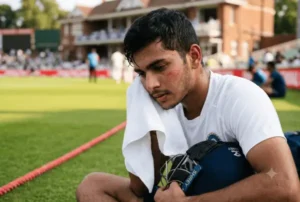 Helmet strap acne is real, and it’s one of the most overlooked skin issues in the sport. The fix isn’t complicated. Blot sweat with a clean cloth instead of wiping — wiping just spreads bacteria and irritates the skin further. Where your gear allows it, go for breathable helmet padding; less trapped moisture means fewer breakouts along the jawline and forehead.
Try not to touch your face between overs. Small habit, but it transfers oil, dirt, and bacteria straight onto skin that’s already stressed from sweat and sun — every fielder does it without thinking, and every fielder pays for it later.
At drinks breaks or innings changes, reapply sunscreen on exposed skin. Don’t assume your morning application is still pulling its weight four hours in — it isn’t. After the match, hit any stubborn breakouts along the strap lines with a salicylic acid spot treatment. It clears clogged pores well without drying out everything else.
Post-Match Recovery and Night-Time Repair
Recovery starts the moment the helmet comes off. Cool the skin down first — a cold compress or aloe vera gel calms sun-flushed, irritated skin fast and takes the inflammation down a notch. Then cleanse thoroughly to strip away the sweat, sunscreen, and dust that’s built up over hours of play.
The real repair happens at night, though. Adults — roughly 19 and up — can bring in actives like retinol or niacinamide a few nights a week. Retinol supports cell turnover and helps fade sun damage over time; niacinamide calms redness and evens out tone. Teens should keep it simpler: gentle, fragrance-free moisturizer plus consistent SPF is genuinely enough. Skin that age doesn’t need aggressive actives yet, no matter what the internet says.
Don’t underrate sleep here, either. Seven to nine hours isn’t just for muscle recovery — your skin does most of its repair work while you’re out cold too.
Age-Specific and Skin Tone-Specific Skincare Advice
Skincare needs shift as you age, and cricketers from 14 to 35 shouldn’t be running identical routines. Teens (14-18) mostly need oil control and gentle acne management — a light cleanser, oil-free moisturizer, and consistent SPF cover most of it. Piling on actives at this age usually causes more irritation than it fixes.
Adults (19-35) can layer in more targeted stuff. A vitamin C serum in the morning brightens skin and adds an extra layer of antioxidant defense against UV stress. Retinol at night helps with fine lines and pigmentation that build up over years of play.
On tanning and hyperpigmentation: darker skin tones can still develop patchy hyperpigmentation from UV exposure, while lighter skin tones tend to burn and redden faster and more visibly. Either way, prevention wins over correction — daily SPF is still your best defense. If dark spots are already showing up, niacinamide and vitamin C are safe, gradual brightening options. Skip the harsh bleaching agents; they tend to wreck your skin barrier and create more problems than they solve.
Eye Protection, UPF Clothing, and Budget-Friendly Product Picks
The skin around your eyes needs attention too, and it’s the part everyone forgets. UV-blocking sunglasses cut glare and protect that thin, sensitive skin — useful whether you’re a batter facing a bright sky or a fielder craning your neck at a high catch. A dedicated under-eye SPF stick is worth adding since regular sunscreen tends to migrate into your eyes once the sweat starts.
For the rest of your body, UPF-rated clothing and a wide-brimmed hat (where playing conditions allow) give you a physical layer of defense no lotion can fully replace.
On budget — you really don’t need premium prices to get this right. Look for:
- A basic sweat-resistant SPF 30-50 sunscreen from a drugstore sports range.
- An oil-free, non-comedogenic moisturizer with ceramides, which help rebuild your skin’s natural barrier and now show up in plenty of affordable formulas.
- A gentle gel cleanser, sulfate-free.
- A simple salicylic acid spot gel for those helmet-strap breakouts.
Four products, used daily, will beat a ten-step routine you give up on after a week. Every time.
FAQ: Your Skincare Questions Answered
What is the best skincare routine for cricketers?
Cleanse, apply sweat-resistant SPF 30-50 with PA+++, use a non-comedogenic moisturizer, and follow up post-match with gentle cleansing and hydration.
How can outdoor athletes protect their skin from sun damage?
Consistent sunscreen use, reapplying every two hours, UPF clothing, and shade during breaks are your core defenses against cumulative sun damage.
What SPF should cricketers use during matches?
SPF 30-50 with PA+++ or higher, chosen for sweat and water resistance.
How do athletes prevent tanning and sunburn while playing outdoors?
Regular sunscreen reapplication, protective clothing, and avoiding peak UV hours where match scheduling allows are the most reliable methods.
Is moisturizing important for sports players with oily skin?
Yes — skipping moisturizer can actually trigger your skin to overproduce oil. An oil-free, non-comedogenic formula keeps things balanced without adding shine.
What skincare products are safe to use during long practice sessions?
Stick to sweat-resistant sunscreen, gentle cleansers, and lightweight moisturizers. Save the stronger actives, like retinol, for night-time, off the field.